
Rockfall Barrier Monitoring
Smarter Than a Net: Why Passive Rockfall Protection Isn’t Enough
A rockfall barrier can do exactly what it was engineered to do — absorb the impact, hold the debris, protect the track — and still leave one question unanswered: does anyone actually know it happened?
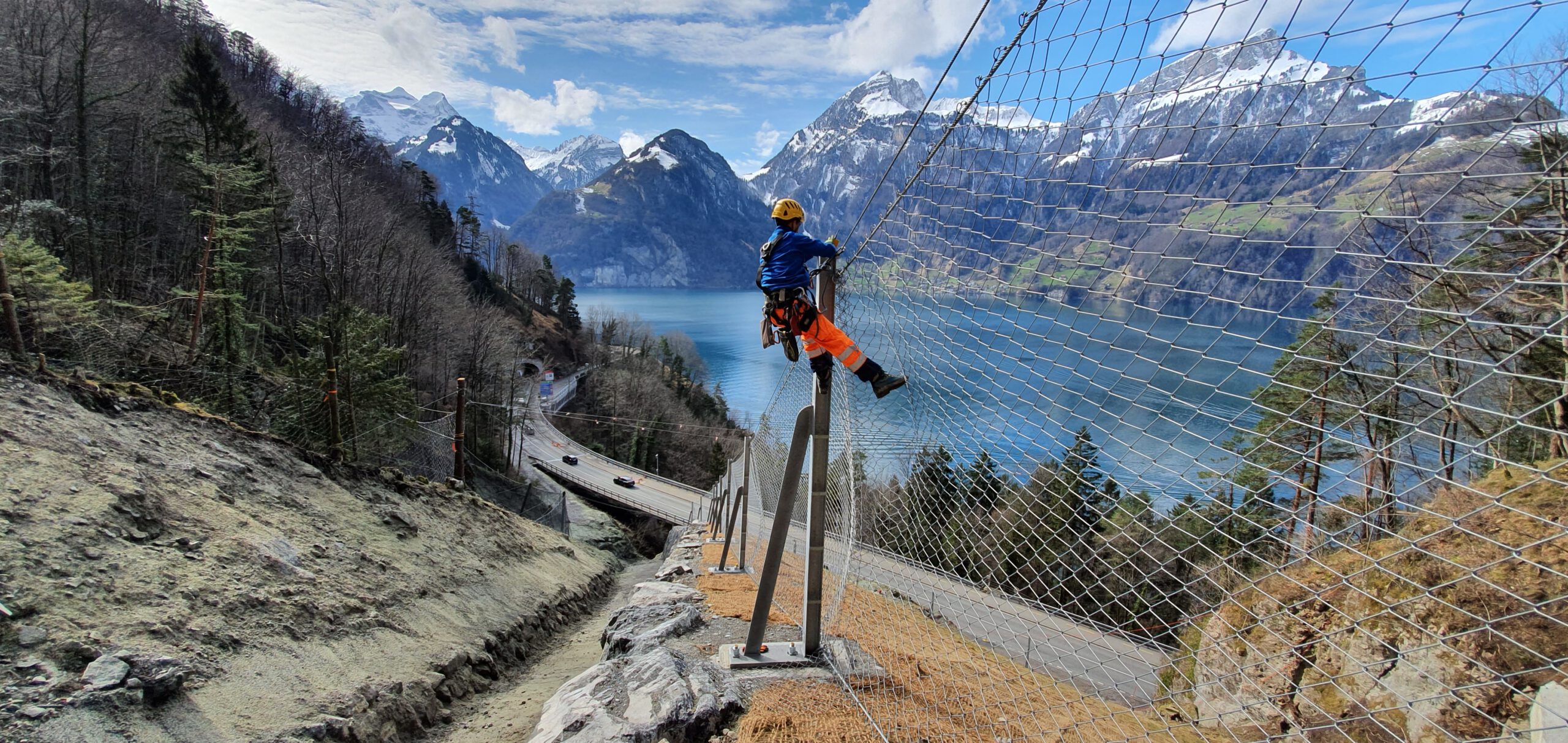
For infrastructure managers, rockfall barrier monitoring is the difference between a structure that silently absorbs an event and one that tells you the moment it has been hit.
The Challenge
The Blind Spot in Passive Protection
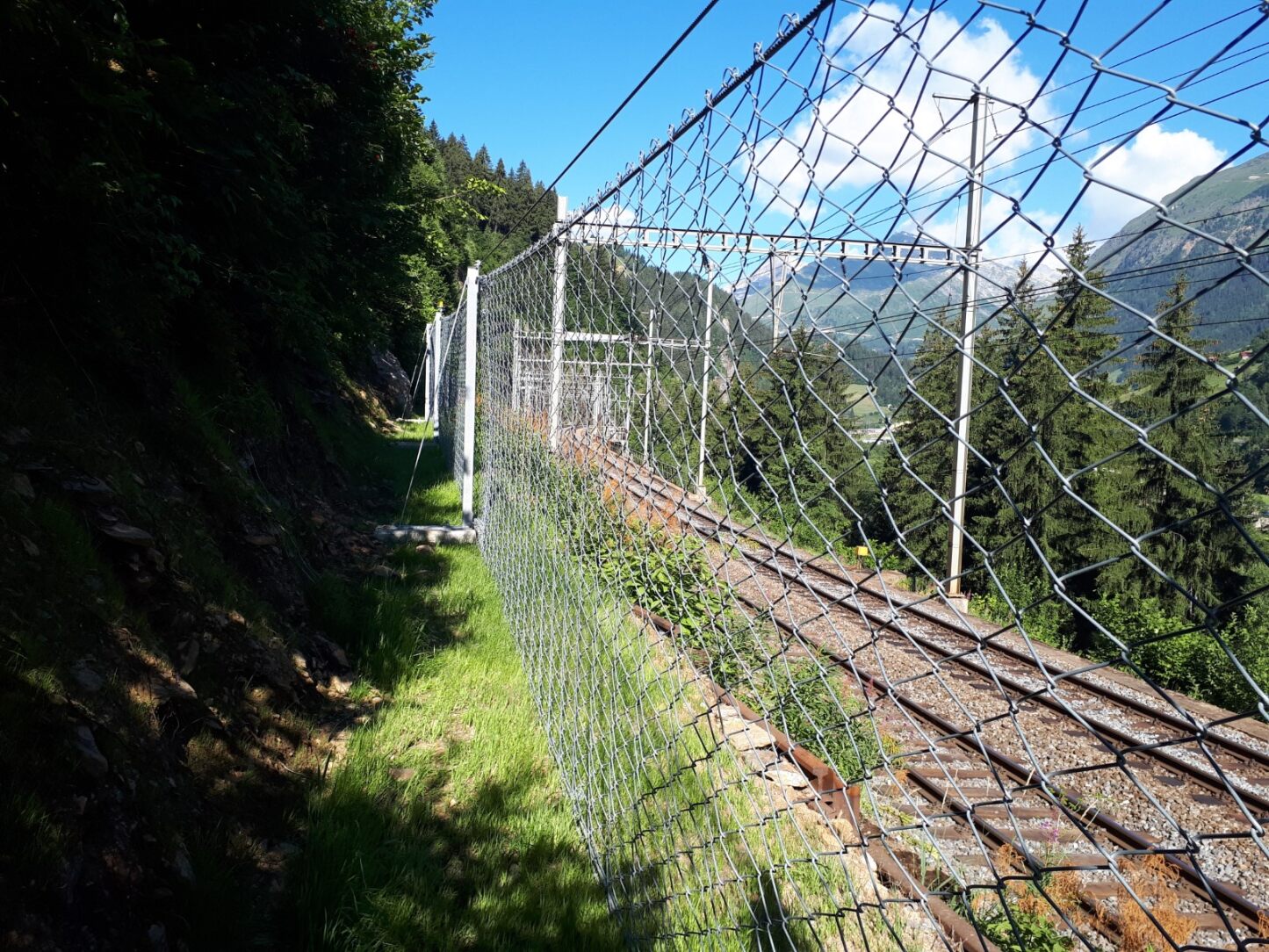
Railways and roads are operating in increasingly challenging conditions as extreme weather events grow more frequent, driving greater instability in slopes, cuttings and embankments. Rockfall barriers, nets and fences remain the proven first line of defence. A correctly designed system absorbs energy, slows falling material and prevents debris from reaching the track. For operators overseeing steep cuttings, tunnels and locations with a known rockfall history, passive protection is the right foundation — and for good reason.
But passive protection has a blind spot: operational visibility. A barrier may successfully catch a rockfall event, yet unless someone witnesses the incident or carries out a physical inspection, operators have no way of knowing it occurred — let alone what caused it or whether the barrier is still performing as intended.
Discovery tends to come later: during a scheduled inspection, through a train driver’s report, or when a maintenance team eventually reaches the location. The consequence is uncertainty. Without active alarming, infrastructure managers don’t know which barriers have taken an impact, or whether they are still capable of doing their job.
The Approach
Enhancing Traditional Protection with Real-Time Rockfall Detection
Removing that delay changes what’s possible. Alerted to an event as it happens, operators can make decisions with better information and less guesswork.
Build on, don’t replace
Passive protection is well understood and widely trusted, which is exactly what makes it a strong foundation to build on rather than replace. It can be retrofitted with sensors as a targeted addition for specific high-risk or priority locations, extending established netting systems into real-time rockfall detection infrastructure without asking operators to abandon what already works.
Enhance proven assets
This is particularly relevant as many railway operators continue to manage infrastructure that has evolved over decades. Replacing existing protection systems is rarely practical or economically justified, making retrofit solutions an increasingly attractive way to enhance proven assets with real-time operational awareness.
Implementation
How to Retrofit a Rockfall Barrier — What It Actually Involves
Understandably, adding detection can raise concerns about disruption. In practice, it rarely does.
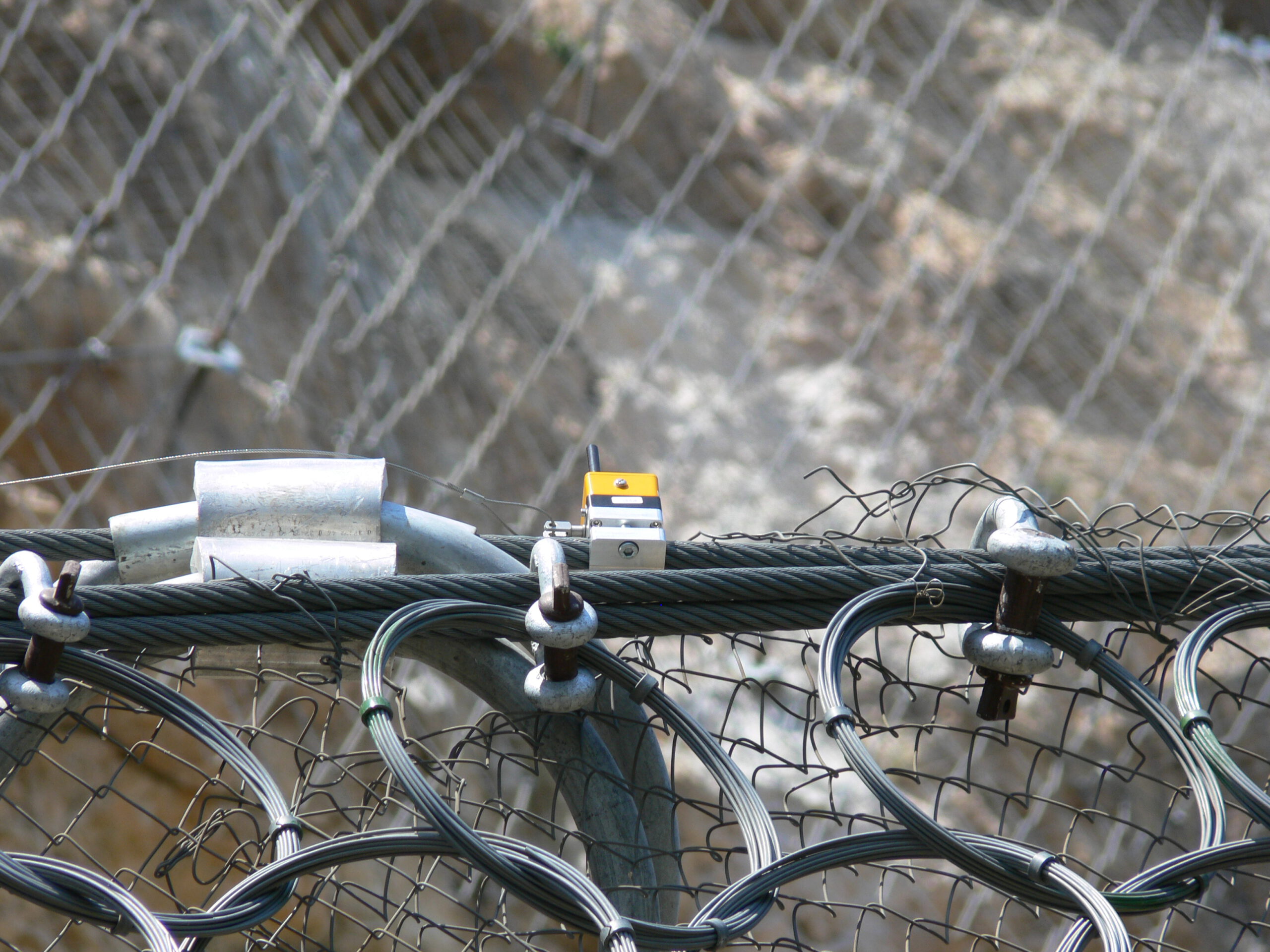
ImpactSentinel™ sensors are wireless and battery-powered, designed to mount directly onto existing protective structures: posts, cables, brake elements, fence sections or other suitable locations. Major civil works and extensive cable installation are seldom required.
A straightforward sequence
A retrofit follows a straightforward sequence: site assessment, sensor placement, installation, communication checks and commissioning through the Sensor Actor Module (SAM), or the customer’s own monitoring system. The objective is simple — take existing protection infrastructure and turn it into an active safety asset.
The system is deliberately barrier-agnostic, so operators are not tied to a specific manufacturer or structure type.
Speed of Alarm
Why Seconds Matter in a Rockfall Alarm System
Once in place, sensors do what passive protection alone cannot: actively report the structure’s condition in real time.
ImpactSentinel™ sensors communicate via dedicated sub-GHz radio directly to the base station before alerts are forwarded to operators. Because there is no reliance on third-party networks or cloud processing, alerts typically reach operators within two to four seconds of an event.
For a train travelling at 160 km/h, every second is roughly 44 metres of track. Earlier awareness gives operators additional time to apply operational procedures, assess the situation and respond before a train reaches the affected section.
The Technology
Three Forms of Detection in One Sensor
The ImpactSentinel™ system combines three independent forms of detection within a single sensor.
Mechanical pull-out
A mechanical pull-out mechanism provides direct alarming when a structure is physically activated.
Accelerometer
Accelerometer-based detection captures vibration and impact,
XYZ tilt monitoring
while XYZ tilt monitoring tracks movement in the structure over time.
Together, these complementary detection methods enable the system to respond to both sudden high-energy events and gradual structural changes.
Alerts can be delivered via SMS, email, dashboards or integrated directly into existing operational systems through SAM — providing actionable intelligence rather than simply generating more data.
Case Study
Proven in the Field
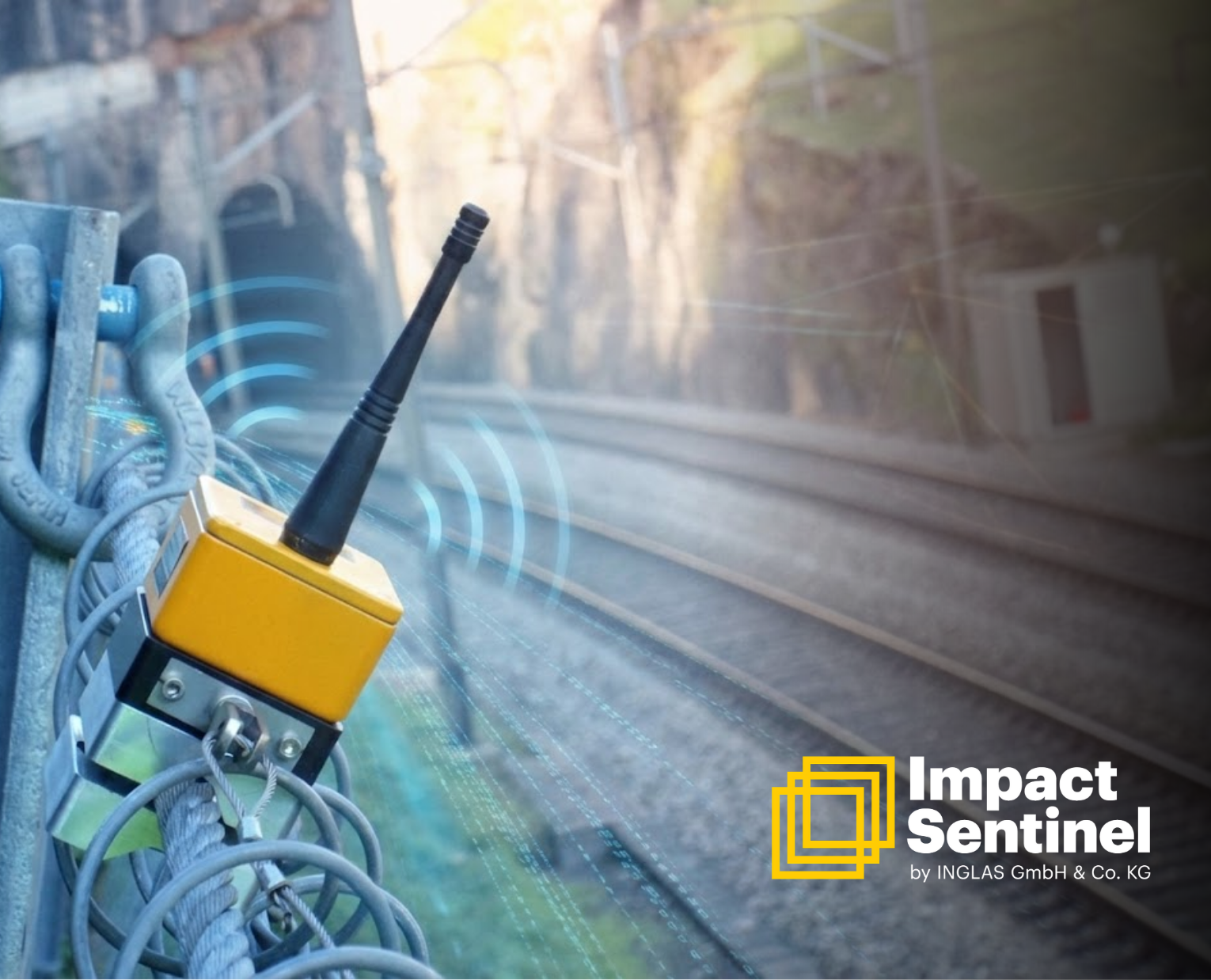
ImpactSentinel™ has operated in the Gotthard corridor in Switzerland since 2010 — a demanding railway environment where steep terrain, tunnel portals and limited driver visibility create significant operational challenges. Over more than a decade of continuous operation, the system has demonstrated the value of reliable, real-time monitoring in one of Europe’s most demanding rail environments.
For INGLAS, long-term deployment in a real environment, under real conditions, remains the strongest demonstration of what the technology delivers.
The Shift
From Passive Protection to Intelligent Infrastructure
Barriers, nets and fences are increasingly becoming active safety assets rather than passive infrastructure. Strong engineering and well-designed protection systems will always remain fundamental, but operators will increasingly expect faster information, remote visibility and better decision support.
Modern safety systems are shifting from treating monitoring and alarming as external add-ons to embedding them as core components of the protection layer itself.
This is not a choice between passive rockfall protection and active visibility. It is the combination of the two: a physical barrier that stops the rock, and a sensor layer that tells you — within seconds — that it did.
Live Demonstration
See It on Your Infrastructure
INGLAS runs live demonstrations of ImpactSentinel™ retrofit alarming on real barrier types. To arrange a demonstration for your network, contact the INGLAS team.
Support
Frequently Asked Questions
What is real-time rockfall detection?
Real-time rockfall detection uses sensors mounted on barriers or slopes to alarm operators the moment an impact or movement occurs, rather than relying on scheduled inspections or chance observation. ImpactSentinel™ delivers alerts within two to four seconds of an event.
Can existing rockfall barriers be retrofitted with detection?
Yes. ImpactSentinel™ sensors are wireless and battery-powered and mount directly onto existing posts, cables, brake elements or fence sections. The system is barrier-agnostic, so operators are not tied to a specific manufacturer or structure type, and major civil works are seldom required.
How fast does the alarm reach operators?
Alerts typically reach operators within two to four seconds, because sensors communicate via dedicated sub-GHz radio directly to a base station with no reliance on third-party networks or cloud processing.
How does a single sensor detect different events?
Each sensor combines three independent detection methods: a mechanical pull-out mechanism, accelerometer-based vibration and impact detection, and XYZ tilt monitoring — allowing it to respond to both sudden high-energy impacts and gradual structural movement.
Where has ImpactSentinel™ been proven?
ImpactSentinel™ has operated in the Gotthard corridor in Switzerland since 2010, providing more than a decade of continuous real-time monitoring in one of Europe’s most demanding rail environments.
